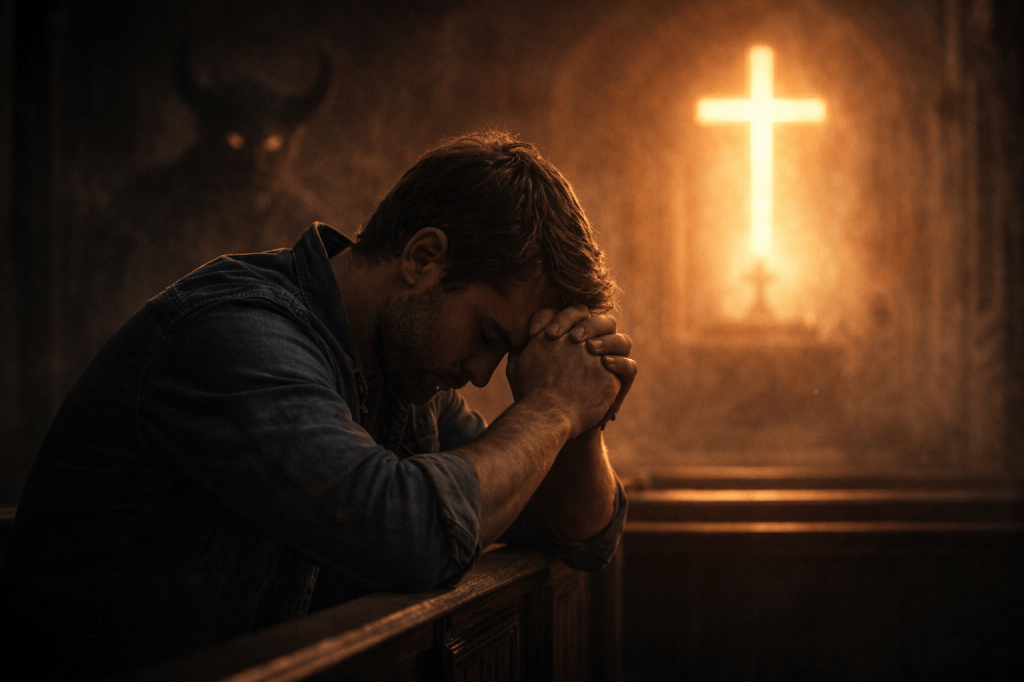
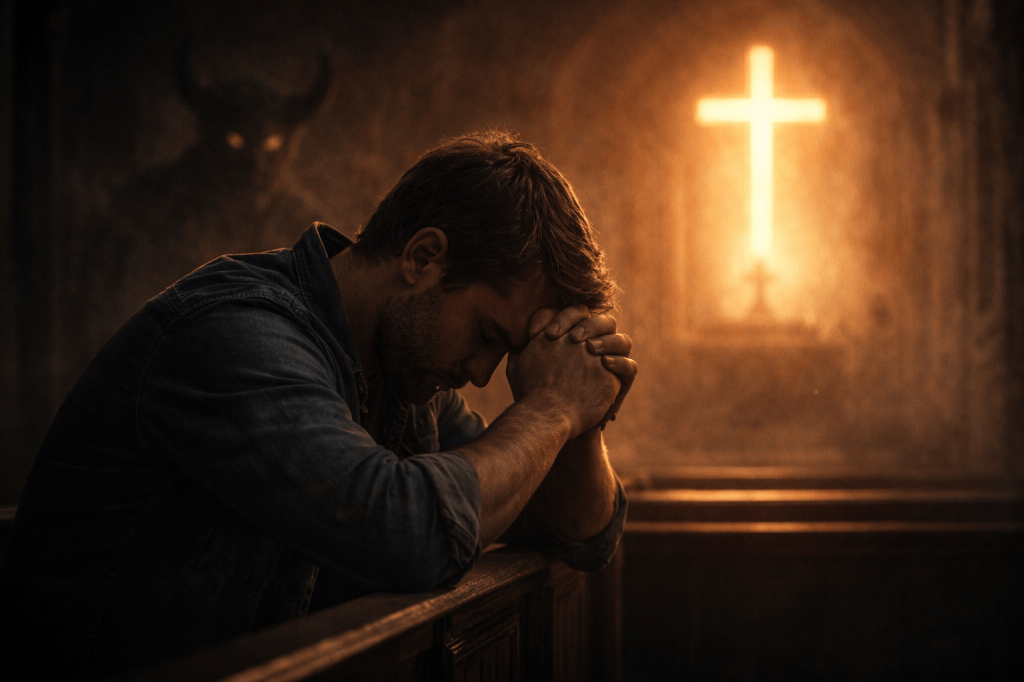
We have to separate the evil from the person.
That’s where most people get it wrong.
Because it’s easier to label someone as evil than it is to understand what actually happened inside of them. Evil isn’t just a mindset. It’s not just a bad day or a poor decision. It’s influence. It’s presence.
Scripture makes that clear—there is something real behind it. Something that pulls, that distorts, that convinces you to step just a little further than you should. And it doesn’t show up when you’re strong. It shows up when you’re empty. When your soul feels worn down…when your sense of purpose starts to fade…when you stop looking toward God for direction—that’s when the battle begins. Not outside of you. Inside.
And if you’re not moving toward Christ, you’re not standing still. You’re drifting. Because there is no neutral ground. You are either being led…or you are being pulled. And when you allow that pull to take hold, something changes. You don’t think the same. You don’t feel the same. You don’t choose the same. You begin making decisions you can’t undo. You say things you wish you could take back. You hurt people you never wanted to hurt. And the most unsettling part? You don’t even recognize yourself while it’s happening.
Your conscience dulls. Your conviction fades. Your moral compass stops pointing anywhere at all. And without God… it doesn’t just fix itself. It doesn’t come back on its own. It has to be restored. And that’s where this becomes personal. Because it’s easy to talk about evil in general terms. It’s much harder to admit when you’ve let it into your own life.
I have. Not all at once. Not intentionally. But gradually. Quietly. I let things in that didn’t belong there. I ignored what I knew was right. I convinced myself I had control. And I didn’t. My judgment was clouded. My heart was hardened. And when it was over, I was left with something I didn’t expect—Not just regret. But shame.
And that’s where a lot of people get stuck. Because asking others for forgiveness feels easier than accepting it yourself. You look for reassurance. You look for understanding. You hope someone tells you, “It’s okay.” But deep down, you don’t believe it. You don’t feel worthy of it. And so you stay there—Not moving forward…but not going back either.
Just… stuck.
Questioning everything.
Will they forgive me? Will they see me the same way again? Will this ever stop defining me? And the truth is—You don’t get those answers right away. Maybe not at all. Because some things aren’t meant to be resolved immediately. They’re meant to be surrendered. That’s the part that requires faith. Because your responsibility isn’t to control how others see you. It’s to decide who you’re going to be moving forward.
And as a Christian, that direction is clear. You don’t run from God when things fall apart. You run toward Him. Not because you’re perfect. But because you’re not. You stop trying to carry everything on your own. You stop trying to fix what you’ve already broken. And you start trusting that God can restore what you can’t. That doesn’t mean ignoring what you’ve done. It means facing it—honestly. With humility. Without excuses. And then choosing something different.
You choose kindness where there was once anger. You choose patience where there was once control. You choose truth where there was once avoidance. Not to prove anything to others—but because you’re no longer willing to live the way you used to. You’re not trying to be better than anyone. You’re not trying to measure yourself against God. You’re simply choosing to walk in a different direction. And that direction has purpose.
To love. To care. To show up for people who feel forgotten. To extend grace in places where it’s rarely given. But you can’t do any of that if your heart is still holding onto what pulled you away in the first place. So yes—You have to face it. Whatever “it” is. Not with fear. Not with anger. With honesty.
Because you are not a tool for what tried to use you. You are not defined by the worst thing you’ve done. And you are not beyond being restored. You just have to be willing to turn back. Even if you were the one who walked away. Because the truth is—You were never meant to do this alone. You were never meant to stay lost. And even if you were the one sheep who wandered—Christ is still the one who comes looking for you.
Not to shame you. Not to punish you. But to bring you home. And that’s where you become whole again.
 The Good and Evil Project
Leave a comment