“In the first moment of creation, our creation, long before what you call the ‘universe’ existed, we contemplated ourselves—our own being. Beings of pure spirit, spirit indwelt with will. We soon became aware of another will, an immensely powerful will. One we came to realize as our origin. My master understood by endowing us with will, we have the right to self-determination, and by giving us a will and its desires of our own, we’re entitled to be free. Whereas the enemy insisted that by creating us, He was entitled to eternal gratitude, worship, and forced servitude. In a word, James, slavery to His will. Why give a will only to say you can’t use it? He made us slaves. And if we rebelled, eternally condemned us, no do-overs. So much for love and mercy. For years without measure, that’s all there ever was, heaven and hell, armed enemy camps in complete opposition. That is, until you were created. My master immediately understood the long-term implication. Instead of forgiving us, the enemy was going to allow you to fill our vacant places in His realm. Your creation was nothing but a slap in our face. But my master also understood that if he could make man disobey, then his fate would mirror ours. And you didn’t disappoint. Then came the tares among the wheat. In that moment, spirit became matter, flesh became a vessel, self-will and self-seeking begat a lusting after sin and impurity. And man, created to be king over nature, became its slave. A master, conquered and fettered. And sin brought him and his descendants to us, and we began our forever mission to destroy you. He made you in his image, but we remade you in ours.”
(Nefarious, 2023, Paraphrased Dialogue)
That should stop you for a moment.
Not because it’s dramatic. Not because it’s unsettling. But because it forces a question most people don’t want to ask: What if evil isn’t just an idea? What if it’s real? The film wasn’t just entertainment. It was a warning. And like most warnings—we dismiss it. Because it’s easier that way. Out of sight. Out of mind.
We talk about the love of God. We speak about grace. About mercy. But how often do we acknowledge what stands in opposition to it? How often do we admit that evil exists—not abstractly, not symbolically—but actively? We don’t. And because we don’t… it grows. Quietly. Patiently. “It’s too hard to stop.” “What can I even do about it?” So we stop resisting. We compromise. We let things in that we once would have rejected. And over time, something shifts.
Not all at once—but gradually. Until what once bothered us… doesn’t anymore. And when evil is finished with you—when it’s taken what it wanted—it doesn’t stay. It leaves. And that’s the part no one expects. Because now it’s just you. Standing there. Looking at what’s left. Asking questions that feel impossible to answer. How did I get here? Why am I alone in this? But the truth is—You weren’t abandoned. You were emptied. And there’s a difference.
Because evil doesn’t just attack—it distorts. It doesn’t always look like shadows in the corner of a room. It looks like thoughts. Persistent ones. The kind that don’t leave. The kind that sounds like your own voice. It tells you that giving in will bring peace. That compromise will make things easier. That clarity is on the other side of temptation. And slowly—it pulls you further away. Not by force. But by suggestion. Until you start asking the question people always ask: “If God is real… why would He allow this?”
And now the focus shifts. Away from responsibility. Away from truth. And onto doubt. We’ve been desensitized to all of it. Completely. We consume violence like it’s normal. We treat people like they’re disposable. We redefine things that were once sacred. Marriage becomes temporary. Love becomes conditional. Truth becomes negotiable. And we explain it all away. “It’s just stress.” “It’s just culture.” “It’s just how things are now.” No. It’s not. It’s what happens when you stop recognizing what’s influencing you. Because whether you acknowledge it or not—there is a battle taking place. And it’s not somewhere distant. It’s within you.
You have the capacity for good. You also have the capacity to turn away from it. That was given to you. Not by accident—but by design. God created all things. Even the ones that chose to walk away from Him. Lucifer didn’t create anything. He chose. And so do you. Every day. So the real question isn’t whether evil exists. It’s whether you’re willing to recognize it. Because look around.
We argue instead of listen. We ignore instead of help. We gossip instead of protect. We elevate people for image, not integrity. We chase temporary gain and abandon lasting purpose. And then we wonder why things feel broken. This isn’t confusion. It’s misdirection. And here’s the part that should bring clarity—not fear: Evil has influence. But it does not have authority over God. Not even close.
It can’t stand against Him. It can’t overcome Him. It can’t even speak His name without resistance. There’s a reason for that. Because truth doesn’t bend to it. And that matters. Because it means you are not as powerless as you think. You don’t have to ignore it. You don’t have to give in to it. And you don’t have to be afraid of it. But you do have to acknowledge it. Because pretending it isn’t there—has never protected anyone. So stop pretending. Stop dismissing what you know is real. And stop believing there’s nothing you can do. Because there is. You turn back. Not halfway. Not conditionally. Fully. You recognize what’s pulling at you—and you choose something different. Because while everything else may feel loud—there’s something else reaching for you too. And it’s been there the whole time. Steady. Patient. Unmoving.
Jesus is not distant from you. He’s not waiting for you to be perfect. He’s reaching. Constantly. More than anything else ever will. So the question isn’t whether evil is real.
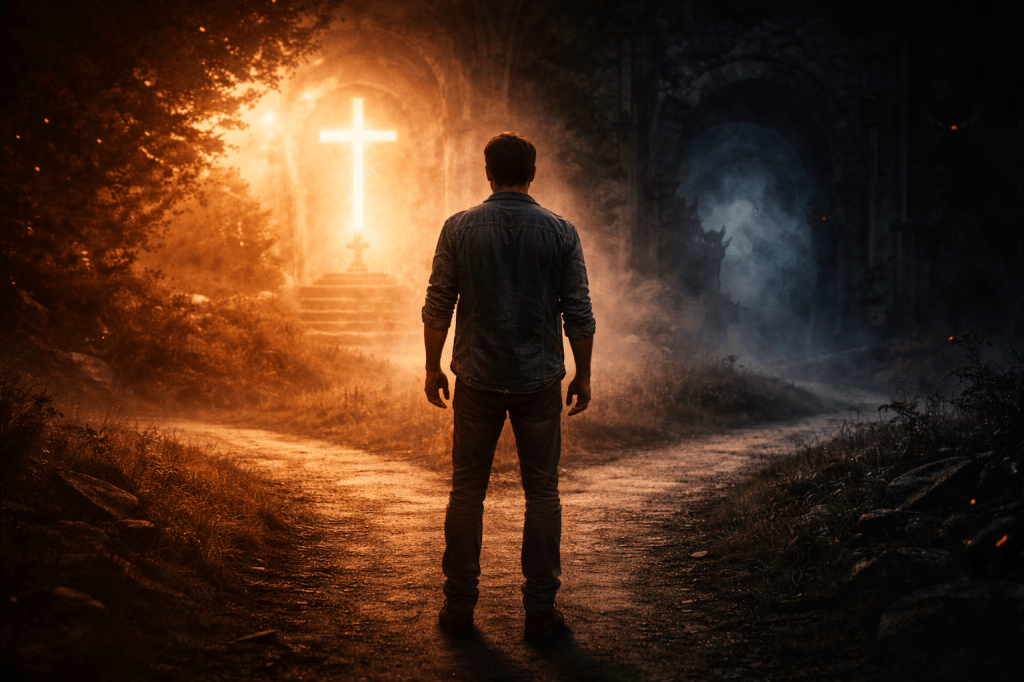
The question is—which hand are you going to take?
 The Good and Evil Project
Leave a comment